
 EN
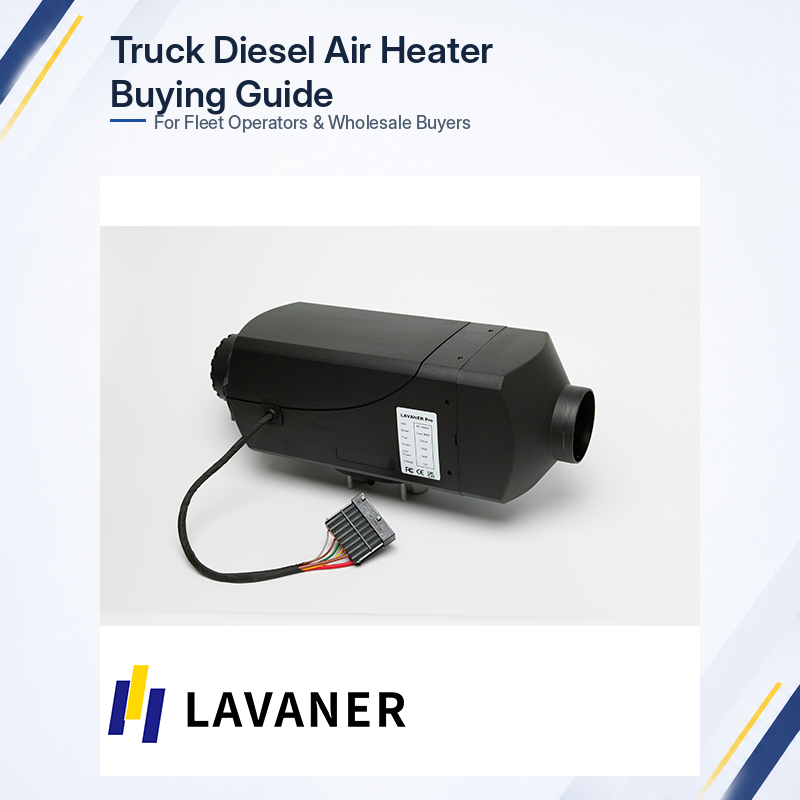
A diesel air heater for a truck fleet should be specified for consistent operation, serviceability and the vehicle’s electrical system—not simply for the lowest unit price. For fleet managers and wholesale buyers, the most useful comparison covers voltage, heater output, controls, installation parts and long-term support. LAVANER offers diesel air heaters and related components for commercial-vehicle applications.
12 V or 24 V: Match the Vehicle Electrical System
Confirm the voltage of the vehicle or auxiliary electrical system before specifying a heater. Many heavy trucks use 24 V systems, while lighter vehicles and some auxiliary installations use 12 V. A heater must match the intended supply; a 12 V unit should never be connected directly to 24 V. For the same electrical power, a higher-voltage system draws less current, but cable sizing, fusing and voltage-drop limits still depend on the approved installation design.
If a wholesaler stocks both versions, use distinct part numbers and clear carton and nameplate identification. A wrong-voltage shipment can create installation delays, equipment damage and avoidable warranty claims.
Compare Heating Output, Fuel Use and Controller Functions
Select the heater class using cabin heat loss, insulation, expected climate and duty cycle. An undersized heater may struggle to maintain comfort; oversizing can also create inefficient operation in some conditions. Compare the heater’s specified operating range and fuel use at relevant loads rather than relying only on a single maximum-output figure.
For fleet service, a controller should be easy to use and support practical diagnosis. Confirm which temperature-control functions, fault indications and other operating modes are available on the exact model. Do not assume that a feature shown on one controller version is available across every heater configuration.
Reliability, Maintenance and Spare Parts
Ask suppliers for test information relevant to the planned duty: repeated starting, voltage behavior, stable operation, shutdown, noise, fuel consumption and production checks. Check how the product is identified by model and revision so that service teams can order compatible replacement parts later.
Combustion-related deposits and normal component wear can require service, but a universal annual burner-cleaning interval is not appropriate for every heater. Follow the maintenance schedule and fault procedures supplied with the exact model, and leave internal combustion-system work to qualified personnel. Confirm availability of serviceable items such as fuel pumps, glow plugs, gaskets, sensors, controllers and wiring where applicable.
Total Cost of Ownership and Wholesale Ordering
For a fleet, the cost per installed and supported vehicle is more useful than heater purchase price alone. Include fitting labor, optional mounting or duct parts, vehicle downtime, fuel consumption, access for maintenance and expected spares. For wholesale supply, also confirm the minimum order quantity, mix of 12 V and 24 V stock, typical lead times, packaging and procedures for warranty claims.
Before a larger fleet release, sample installations in representative trucks can reveal wiring, clearance, controller and servicing issues that a catalogue comparison misses. LAVANER can discuss heater and installation-kit configurations with fleet operators and distribution partners based on their actual vehicle requirements.