
 EN
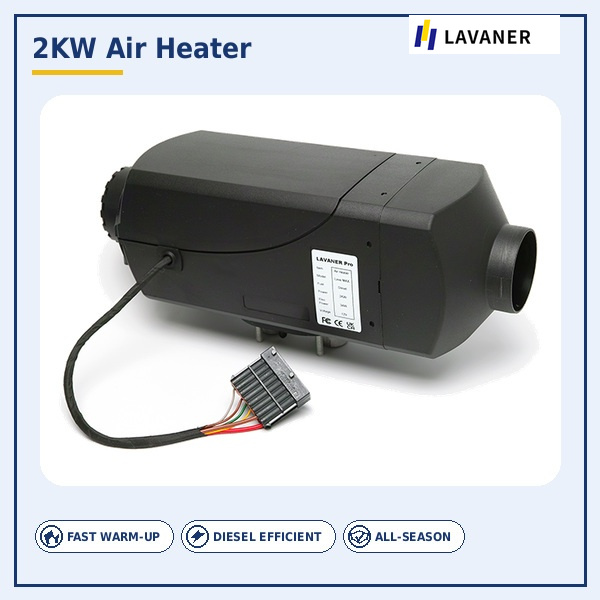
For a vehicle builder or distributor, an OEM heating project involves more than placing a logo on a standard box. Heating output, voltage, controls, wiring, installation components and the documents supplied with the product all affect how efficiently a heater can be integrated and supported. At LAVANER, customization discussions begin with the target vehicle, the sales market and the functions the end user actually needs.
Heating Output and Electrical Configuration
LAVANER offers 2 kW and 5 kW diesel air heaters as well as 5 kW and 10 kW hydronic heater options. The right choice depends on whether the project needs direct cabin heating, engine preheating or an integrated coolant-based solution.
Electrical-system compatibility also needs to be specified at the beginning of the project. Depending on the model, 12 V or 24 V configurations may be available. An OEM specification should confirm the selected heater's voltage, operating environment, installation orientation and interface requirements instead of assuming that every output is offered in every configuration.
Controller Choices for Different End Users
A simple button controller, a rotary control and a display-based smart controller support different user experiences. A fleet vehicle may prioritize clear, straightforward operation, while a premium camper conversion may place more value on digital status information and temperature management.
Functions must be matched to the actual controller and ECU combination. For example, programmable timing is associated with LAVANER's smart controller options, rather than being a standard function of every basic switch. Remote-control or connected features should be reviewed separately for hardware compatibility and any applicable radio requirements. This avoids promising functions that are not part of the selected product configuration.
Vehicle-Specific Harnesses, Kits and Private Labeling
Installation details can have a major effect on the time required for vehicle conversion. OEM projects may involve reviewing wiring harness length, connector placement, mounting brackets, ducts, vents and fuel-system accessories. LAVANER also offers T5/T6-related installation kit options, subject to vehicle and heater compatibility.
For distributors, private-label packaging, product identification and supporting manuals can be discussed as part of the project. These items should remain consistent with the actual hardware, approved model designation and traceability requirements. Any changes to wiring or the heater itself should be evaluated for both technical feasibility and documentation impact before production.
European Approvals and Materials Compliance: Check the Scope
For European programs, buyers should request documentation relevant to the exact product and intended application. LAVANER has E-mark type-approval documentation for specified air-heater models under UN R10 (electromagnetic compatibility) and UN R122 (heating systems). That approval must not be treated as blanket coverage for every heater, new OEM brand name or modified configuration: the applicable certificates and any required extensions need to be checked.
RoHS and REACH evidence serves a different purpose from vehicle type approval. Depending on the product and legal scope, an evidence package may include component test reports, supplier declarations and technical material records. LAVANER can review the applicable documentation needs with OEM customers, but the availability and scope of evidence should be confirmed for the chosen configuration. A well-defined specification at the start of a project helps avoid expensive changes later.