
 EN
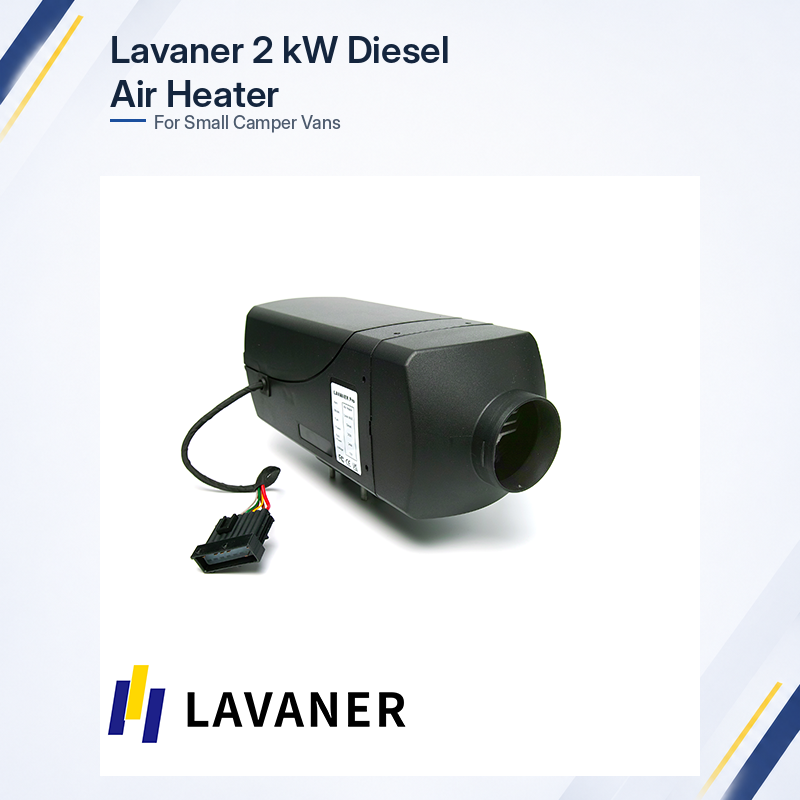
A 2 kW diesel air heater is often a practical option for a compact camper van, but selecting one involves more than comparing rated heat output. Available mounting space, battery capacity, insulation, duct routing and expected winter conditions all matter. The LAVANER LAVA Max Alpine 2 kW standard kit provides a useful reference for evaluating these requirements.
Published 2 kW Heater Specifications
For the LAVA Max Alpine 2 kW standard kit, LAVANER lists the following product data. These figures describe that published configuration; buyers should confirm the data sheet for the exact variant they intend to order.
• Heating capacity: 2.0 kW rated.
• Electrical system: 12 V or 24 V DC variants.
• Rated electrical power consumption: 34 W; startup demand must be considered separately when sizing the power supply.
• Listed fuel consumption: 0.28 L/h; actual usage depends on operating conditions and heater control.
• Dimensions and weight: 340 × 115 × 122 mm (L × W × H); approximately 2.7 kg.
• Published heater airflow: 105 kg/h under the stated specification conditions.
Will a 2 kW Heater Suit a Small Camper Van?
Heat demand depends on the van’s insulation, glazing, air leakage, outside temperature and how the space is used. A well-insulated compact conversion may have different heating needs from a similarly sized van with exposed metal panels and frequent door openings. Rather than relying on a fixed floor-area claim, compare the heater’s operating range with the vehicle’s expected heat loss.
Mounting Space, Air Ducts and Electrical Planning
The heater body is compact, but its installed footprint also includes the air intake, hot-air outlet, fuel line, wiring, exhaust system and service clearances. Plan the layout before cutting mounting or duct openings. Keep the warm-air duct as direct as practical and within the heater manufacturer’s permitted duct and outlet configuration. Excessive bends or restricted outlets can reduce airflow and affect temperature control.
Select the correct 12 V or 24 V heater for the vehicle. Battery and cable sizing should account for ignition demand, not just the rated running wattage. Combustion-air and exhaust routing must follow the specific installation instructions, with exhaust safely discharged outdoors and away from openings through which fumes could enter the living space.
Cold-Weather Operation, Noise and Controls
Cold starts depend on the condition of the fuel system and the voltage available at the heater during ignition. Use suitable diesel fuel for the climate, maintain reliable electrical connections and follow the manufacturer’s operating and maintenance guidance. Avoid treating an advertised low-temperature figure as a guarantee of successful starts in every installation.
LAVANER lists a brushless motor for this product family. In a camper van, perceived noise also depends on duct resistance, the heater mount and fuel-pump isolation. Check the controller supplied with the chosen kit for its available temperature settings and operating modes, as functions can differ between configurations.
For van converters and distributors, the most useful next step is to confirm the exact heater variant, installation kit, electrical supply and duct layout together. This provides a more reliable basis for specifying a compact LAVANER heating system than rated output alone.