
 EN
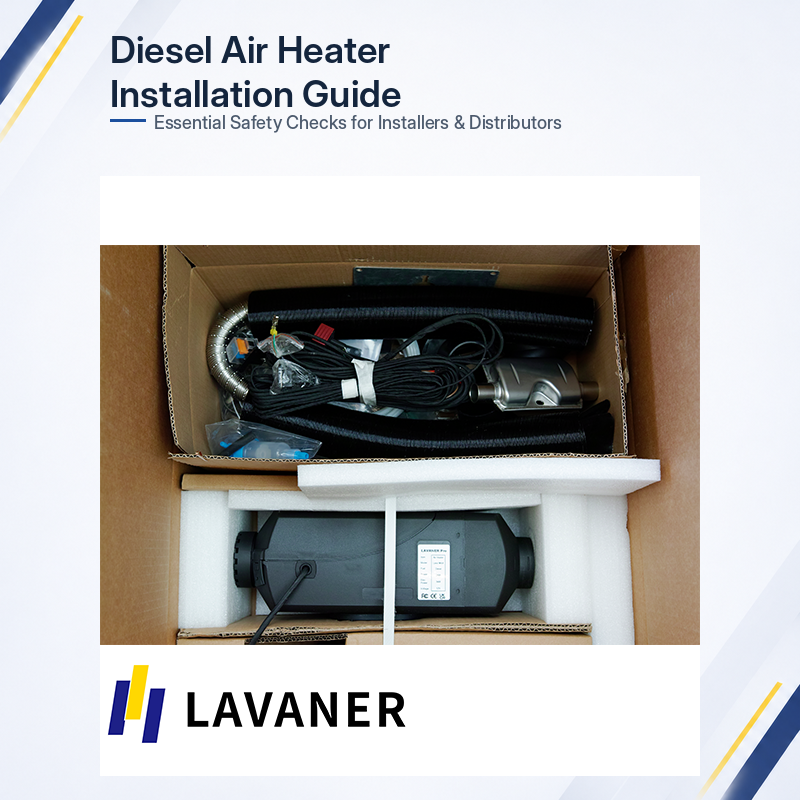
A diesel air heater can provide dependable cabin heating only when the complete system is installed correctly. For professional installers and distributors, the key checks extend beyond mounting the heater: combustion air, exhaust routing, fuel supply, electrical protection and commissioning all affect the result. This guide outlines the main inspection points for LAVANER diesel air heater installations. It is a general checklist, not a substitute for the installation manual for the exact heater and vehicle.
Combustion Air, Exhaust Routing and Carbon Monoxide Protection
Keep the combustion circuit separate from the occupied space. Route the combustion-air intake and exhaust in accordance with the applicable model instructions, with the exhaust discharged outside the vehicle. Position both openings to reduce the risk of exhaust being drawn back into the combustion intake, cabin ventilation system, windows or doors. Avoid areas exposed to road spray, debris or foreseeable water ingress.
The exhaust system becomes very hot in operation. Use the specified pipe, clamps and mounting points, secure the connections against vibration, and maintain the clearances required from fuel lines, wiring and heat-sensitive materials. After installation, inspect the route and joints for leakage or damage. A suitable carbon monoxide alarm in an occupied compartment adds protection, but does not replace correct exhaust installation or inspection.
12 V and 24 V Wiring, Fuses and Cable Selection
Check the heater nameplate before connecting power. A 12 V heater must not be connected directly to a 24 V vehicle supply, and electrical components should not be mixed across voltage variants unless expressly approved. Cable size, cable length, connector quality and battery condition all influence voltage at the heater during startup.
Use the wiring harness and fuse rating specified for the heater configuration. Route cables away from abrasion, exhaust heat and moving components; secure and protect all connections. The fuse location and grounding arrangement must follow the vehicle and heater installation requirements. A heater that runs at steady state can still experience startup problems if voltage drops excessively during ignition.
Mounting Position, Hot-Air Ducting and Fuel System
Choose an approved mounting position with adequate access for inspection and service. Observe the permitted heater orientation and mounting-surface requirements in the model manual rather than assuming that every heater may be installed vertically or horizontally. Keep the heating-air intake and outlet unobstructed, and avoid duct arrangements that impose excessive restriction or direct very hot air at vulnerable trim.
Install the fuel metering pump, fuel pickup and supply line as specified for the particular system. Protect the line from heat, chafing and sharp edges, verify the routing and connections, and check for leaks. Standard diesel air heater installations generally use a metered fuel supply; do not assume that a separate fuel return line is required.
Commissioning, Fault Codes and Installation Records
Before handing over the vehicle, complete the checks required by the model manual: verify fuel and electrical connections, inspect the exhaust and intake, prime the fuel system where instructed, and observe startup, stable operation and the controlled shutdown sequence. If the controller displays a fault, investigate the cause using the relevant fault-code guidance rather than repeatedly clearing the warning.
Record the heater model and serial number, supply voltage, fuse specification, installation position, exhaust route and commissioning outcome. These details make later troubleshooting, service and warranty discussions more efficient for installers and LAVANER distribution partners.
A consistent installation checklist helps reduce avoidable field failures. The final authority for dimensions, clearances, wiring, fuel-system layout and commissioning remains the instructions supplied with the exact heater model.