
 EN
EN
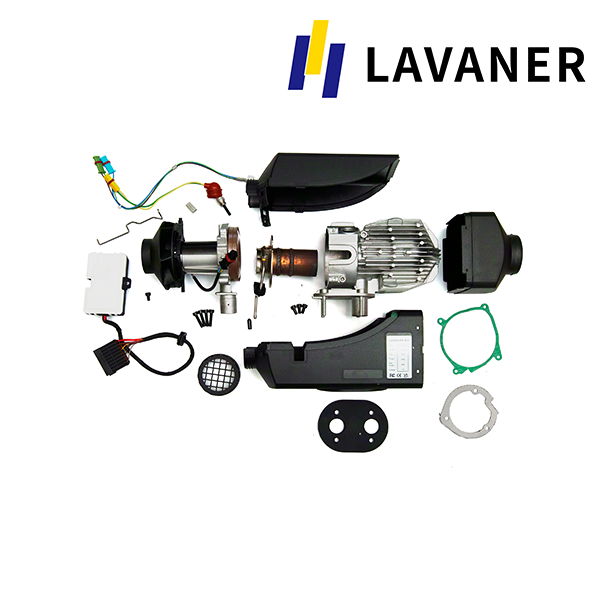
How Water Pumps Work in Hydronic Diesel Heating Systems.
Water Pumps Are Relevant Only in Liquid-Based Heater Systems
When discussing diesel heaters, it is important to distinguish between air heaters and hydronic heaters. A diesel air heater delivers heat directly through airflow and does not require a coolant circulation pump. A hydronic diesel heater, by contrast, transfers heat into a liquid circuit, so circulation becomes a basic operating requirement rather than an optional accessory.
For that reason, any discussion of water pumps should be clearly understood as a discussion about hydronic diesel heating systems, not diesel heaters in general. In these systems, the pump does not generate heat. Its role is to move heated coolant through the circuit so the system can transfer and distribute thermal energy effectively.
Why Coolant Circulation Matters
In a hydronic system, the heater and the circulation loop must work together. The pump moves coolant through hoses, heat exchangers, fan-coils, radiators, or other connected components so that heat can be carried away from the heater and delivered where it is needed. Without adequate circulation, heat may concentrate near the heater instead of being distributed through the rest of the system.
Stable coolant flow therefore supports more even temperatures, more predictable heat transfer, and more stable system operation. This becomes even more important when the layout includes multiple branches, several heat emitters, or long hose routing.
How System Layout Affects Pump Performance
Pump behavior depends heavily on the overall circuit. Hose length, hose diameter, bends, elevation changes, heat-exchanger resistance, branch design, and coolant viscosity can all influence how easily the liquid circulates. A pump that performs acceptably in one installation may not behave the same way in a more restrictive or more complex system.
That is why pump performance should not be judged as an isolated number. It must be considered together with the actual layout, expected operating temperature, and total circuit resistance of the hydronic system.
Practical Installation Considerations
Beyond basic flow, long-term performance is also affected by installation quality. Pump position, electrical compatibility, air removal from the coolant loop, hose routing, service access, and fluid cleanliness all influence reliability. Poor bleeding or trapped air, for example, can reduce circulation quality even when the pump itself is functioning.
From an application perspective, the key principle is simple: the heater, pump, hoses, and heat-distribution components should be treated as one integrated circuit. Good results depend on the whole system being planned as a matched hydronic loop rather than as separate parts chosen independently.
Conclusion
Water pumps are essential in hydronic diesel heating systems because they make coolant circulation possible, but they are not relevant to diesel air heaters. Understanding that distinction helps RV builders, installers, and equipment integrators evaluate heater systems more accurately and avoid confusion between air-based and liquid-based heating designs.