
 EN
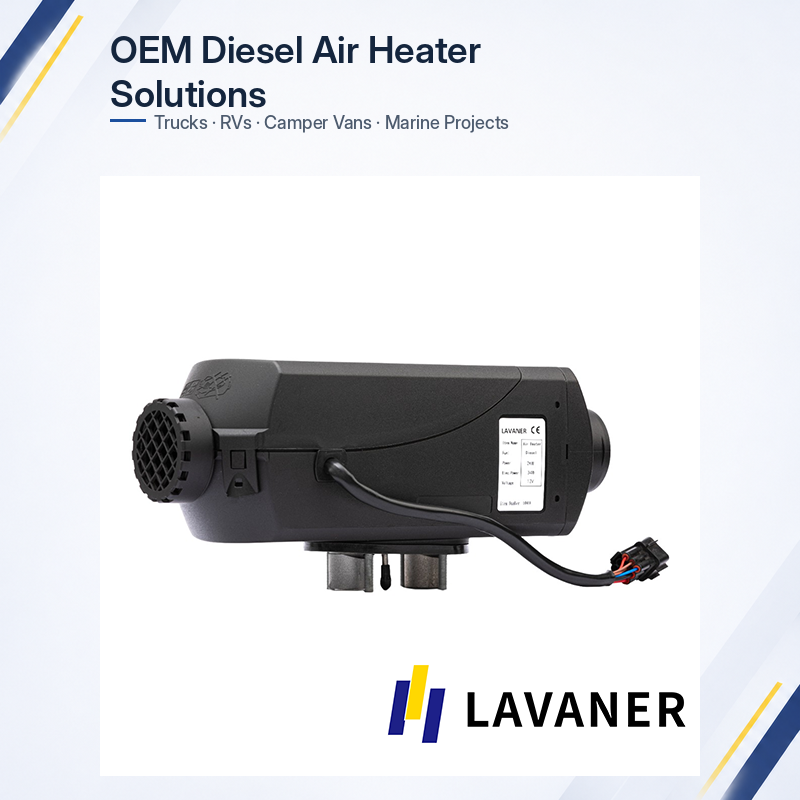
An OEM diesel air heater project begins with the vehicle, not the heater catalogue. A truck sleeper cab, an RV, a compact camper conversion and a marine cabin impose different constraints on heating capacity, electrical supply, packaging and installation. LAVANER works with equipment manufacturers and distributors on diesel air heater configurations, accessories and project-specific requirements.
Select the Heating Capacity for the Application
Two common product categories are 2 kW and 5 kW class diesel air heaters. A compact, well-insulated space may be suited to a smaller heater, while a larger or less-insulated cabin may require greater capacity. The correct choice depends on expected heat loss, outside temperature, operating pattern and the airflow available through the proposed duct system. Model-specific rated output and modulation range should be confirmed from the relevant data sheet.
Voltage is an equally important starting point. Select a 12 V or 24 V heater to suit the vehicle electrical architecture, then assess power distribution and starting-current requirements. Using a heater with the wrong supply voltage is not a valid way to adapt it to a vehicle platform.
Installation Requirements for Trucks, RVs and Camper Vans
Truck and fleet installations need repeatable mounting, reliable wiring, access for maintenance and durable fuel-line routing. RVs and camper vans place more emphasis on compact packaging, hot-air distribution, low perceived noise and the location of intake and exhaust components near occupied areas.
For an OEM program, the installation kit deserves as much attention as the heater. Confirm brackets, air ducts, outlets, fuel components, electrical harnesses, controller placement and the permitted routing of the combustion system. A configuration should be tested in a representative vehicle before release for volume installation.
Marine and Off-Road Projects Need Separate Validation
Moisture exposure, salt-laden air, condensation and vibration may change material and installation requirements. A proposed marine installation should be assessed for corrosion protection, cable sealing, exhaust routing, water ingress, ventilation and any applicable marine rules or approvals. Suitability for a road vehicle does not by itself establish suitability or certification for a boat.
Off-road equipment presents different vibration, dust and impact conditions. Bracket design, fuel-line protection and connector retention should be assessed against the intended duty. Where the environment exceeds an existing heater configuration’s validated limits, additional engineering and testing may be necessary.
OEM/ODM Scope: What Can Be Customized?
Depending on the project and technical feasibility, LAVANER can discuss controller options, wiring-harness lengths, mounting components, air distribution parts, product labeling and packaging. More extensive modifications, including control interfaces or structural changes, require agreed specifications and validation. Customization should not be understood as an automatic approval for every electrical, mechanical or software change.
What to Confirm Before an OEM Project Is Released
OEM buyers should align on the intended application, heater configuration, voltage, installation layout, performance acceptance criteria, supply of spare parts and documentation. Where type approvals or other compliance requirements apply, their scope must be checked against the final product and any modifications. A structured sample-validation and change-control process reduces the risk of an apparently small change creating problems in production or after-sales service.
LAVANER’s role is to help partners develop a practical heater-and-accessory configuration around the intended use. The right OEM solution is one that can be installed consistently, documented clearly and supported throughout its service life.