
 EN
EN
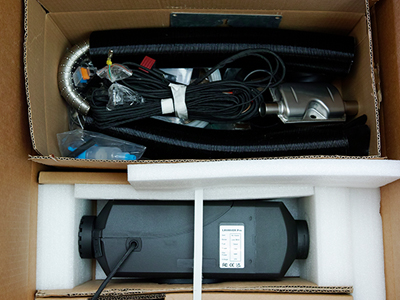
As a long-established professional manufacturer of diesel heaters, Lavaner knows that high thermal efficiency is one of the most important indicators of heater performance. It reflects how effectively the heater converts the chemical energy in diesel fuel into usable heat. But how exactly is this efficiency measured, and what design factors influence it most?
Basic Calculation of Thermal Efficiency
Thermal efficiency is expressed as the ratio between:
useful heat output ÷ total fuel energy input
To measure useful heat output, engineers calculate the temperature rise and airflow (or water flow) passing through the heat exchanger. The energy input is calculated based on fuel consumption and the lower heating value of diesel.
This energy-balance method is widely used across the industry.
Influence of Atomization Method
Atomization breaks diesel fuel into fine droplets, increasing surface area and mixing efficiency.
• Fine atomization → cleaner combustion → higher efficiency
• Poor atomization → incomplete burn, more soot, lower efficiency
Lavaner’s high-precision fuel nozzles ensure fine spray distribution, helping maximize combustion efficiency.
Heat Exchange Structure Optimization
Even with perfect combustion, efficiency depends on how much heat is captured.
Effective designs include:
• Enlarged heat exchange surface areas
• Multi-channel designs to increase air flow contact time
• Optimized airflow turbulence so hot air stay longer inside the exchanger
These engineering improvements allow the heater to extract more usable heat before exhaust gases are released.